Best way to Choose Quality Teak Wood Furniture

Best way to Choose Quality Teak Wood Furniture. Nowadays, furniture made of teak wood is still famous in Indonesia because of its strong natural fibers. In terms of quality, teak has a better quality than mahogany. Even teak wood furniture is very sturdy and cannot be eaten by termites or mice.

But if you are going to buy furniture made of teak wood, then you should know how to choose the right furniture made of quality teak wood.

  1. The finish looks nice and smooth
    One way to find out quality teak furniture products is to see the final finishing that looks good. Where on the furniture there is an even coloring in all parts and all the wood pores are covered in finishing.

In addition, the finishing layer is quite thick and not too thin. When touched by hand, the surface of the furniture feels smoother and not bumpy. A good finish also lasts a long time and doesn’t fade quickly.

  1. Avoid teak furniture that has many holes on its surface
    How to choose quality teak furniture correctly is to avoid choosing furniture that has small holes on its surface. Because the holes in the teak wood have insect houses in them that are connected to each other and cause powder to form on the wood.

The result of the existence of holes in teak wood furniture is that the inside is porous even though the outside looks solid. For this reason, avoid buying teak wood furniture that has holes in its surface.

  1. Furniture has a sturdy and symmetrical construction.
    Considering the price of furniture made from teak wood is quite expensive, so when you intend to buy furniture made from teak, try to make the right choice.

Choose teak wood furniture that has a construction that looks very strong and has a symmetrical shape on its surface. The reason is that teak wood furniture that has a symmetrical shape contains a beauty value that is evenly distributed throughout the corners.

  1. Choose furniture made from old teak wood that is 20 to 30 years old
    Actually, the older the teak wood raw material used in furniture, the more sturdy the construction it has.

While the characteristics of old teak wood have a denser fiber arrangement, very heavy weight and reddish brown in color. You can also buy teak furniture from TPK (Wood Auction Place), since the age of the wood can be more than 20 to 30 years.

  1. Try to get genuine teak wood furniture
    In addition to choosing furniture made from old teak, you should also get furniture made in Teakindo.com

Most teak wood furniture made from Teakindo.com has a much higher value because the quality standards are already on an international scale.

Therefore, choose the needs of teak wood furniture by buying it directly from Teakindo.com. In addition you could apply the five best ways to choose teak wood furniture above. And after you buy it, don’t put the furniture in a damp place.

Best way to Choose Quality Teak Wood Furniture

The Best Way for Wooden Furniture Treatment at Home

The Best Way for Wooden Furniture treatment at Home. Wooden furniture such as mahogany or teak and other are items that add uniqueness and aesthetics to your home. You may still have a wooden armchair from your grandfather that has become an antique in your home. However, you have to take good care of your furniture so that could lasts for generations.

1. Do not store in direct sunlight, wooden furniture has a certain amount of moisture in it. Storing it in direct sunlight will evaporate the moisture and may crack in some areas. In addition, the color can also fade. You also should not place a wooden chair too close to the fireplace if there is a fireplace in your house.

2. Do not be submerged in water. Simple solutions for caring wooden furniture should include this one. Soaking can damage the surface of your furniture. Instead, take warm water and dish soap to clean the furniture. Use a toothbrush for delicate areas. Take a soft damp cloth for the finishing touch.

3. Use coasters and mats. Do not serve drinks and food directly to your wooden table. Irritation marks are too stubborn to be removed. Always use coasters or designer mats before serving anything on a wooden dining table or guest table and so on.

4. Applying wood coating. This is one of the most important solutions for caring for wooden furniture in summer. Soft wood upholstery with superior quality can prevent your furniture from being damaged. Apply a light coat of wood directly and wait 30 minutes. Scrub with a soft brush. Do it again after 60 minutes or so to get that shine.

5. Frequent cleaning Dirt and dust make your furniture itchy. Therefore, you need to clean wooden furniture often. If you have upholstered furniture, vacuum weekly, remove hidden dust and change pillowcases regularly.

6. Do not leave it in the rain. Soaking in rain water is the reason why mold and mildew form on wood. Rotting is another matter. So, always keep your wooden furniture indoors when it rains.

7. Quick repair when you have taken good care of your furniture, some wood furniture may have hairline cracks or the color can be slightly damaged if hit. So, using colored shoe polish can hide those minor blemishes effectively. However, don’t forget to use the same color. The Best Way for Wooden Furniture treatment at Home

How to prevent mold/fungus grows on wood

How to prevent mold/fungus grows on wood. Fungus is one of the microorganisms that cause the color of wood to change and then cause decay if the quantity is excessive. Because fungus is not able to produce their own food, they depend on several natural materials including leather, cotton, rattan, paper and wood.

In terms of its relationship with wood, there are 4 main requirements before fungi can be grow on wood, namely: oxygen supply, air temperature between 5-38 °C, high humidity and of course the presence of wood. We just have to overcome one of these conditions to prevent the wood on furniture or building construction from getting moldy.
It’s pretty clear that we can’t limit the presence of oxygen around wood because humans need it too.

The air temperature needed by fungus to live is in the same range as humans and other living things. Even some types of mushrooms can live at temperatures below 0 °C. So in this section it is equally difficult to limit. The most effective method is to keep the wood dry. That is why wood must be kiln dried at an MC level of 8-14% before being processed into furniture or other constructions (buildings or bridges). Most fungi begin to live on wood that has an MC level above 20%. Below that level, it is very difficult for the fungus to start spreading.

Furniture
For furniture in the room, with fairly stable air conditions and fairly low humidity, it is still possible to avoid mold, or it can be said that it is easy to prevent the furniture from growing mold. But for outdoor furniture is a challenge in itself. Therefore, outdoor furniture manufacturers must always be careful in choosing the type of wood for outdoor furniture. There are several types of wood that already have natural chemicals in the form of ‘poison’ for fungi so that no fungus can attack even though the 4 conditions mentioned above are met. Examples of types of wood in Indonesia are teak, ebony and ironwood.

However, the availability of this type of wood is also limited because more people need it and the limited time to grow for this type of tree which is at least 30 years old to be cut down and processed into industrial wood.

Laying furniture in the room will also be at risk of being attacked by mold if the room does not have good air ventilation.

Several ways of using chemicals have been widely used today by several factories and sawn wood industries. The disadvantage of this method is the presence of chemicals that can be harmful to furniture users or workers in the factory.

How to prevent mold/fungus grows on wood

Choosing Teak Wood Grade

Choosing Teak Wood Grade. Everyone knows that teak wood is excellent in furniture industry. You could say that teak wood is perfect, very durable, and very strong so that it is resistant to extreme weather changes in a 4 season country and is immune to any insect attack. But have you ever really known that not all teak wood is of good quality?

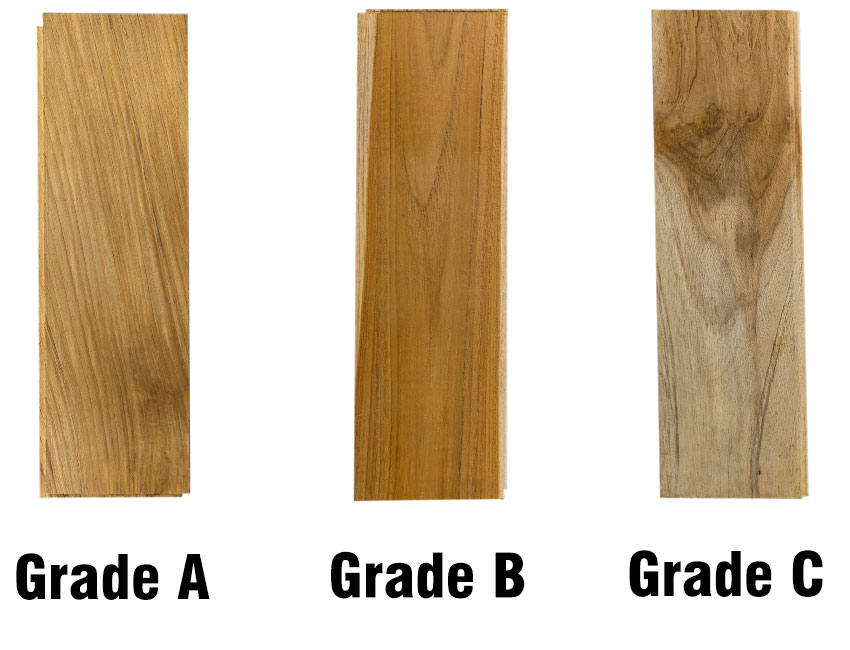
The quality of teak wood is classified into 3 grades, namely grade A, grade B, and grade C. Grade A Teak is more expensive than Grade B Teak, and Grade B Teak is more expensive than Grade C Teak. Variations in the price of teak wood furniture in various furniture shops in Indonesia.

Teak Wood Grade A

Grade A teak wood is the best quality teak wood. This teak wood comes from the center or heart of the teak tree (heartwood) with a tree age of at least 40 years. Grade A can be seen from the fibers that are straight and aligned, the color is uniform, the fibers are very tight, and feels a bit greasy when touched by the surface of the wood. It is this oil that gives teak wood such great resistance that it can withstand extreme weather (usually in 4 season countries) and insect attacks including termites. However, this part is only about 25% of the entire log, and this is what makes it rare and very expensive.

Teak Wood Grade B

Grade B Teak wood comes from the outermost part of the heartwood of the teak tree (heartwood), this part is 25% – 30% of the entire tree trunk. Compared to grade A teak, grade B teak has a slightly lighter color, less irregular fibers, and less glossy, because it contains less oil than grade A teak. The grain of the wood fiber is not as dense as grade A wood, but grade B wood is still good for use as raw material for furniture or furniture.

Teak Wood Grade C

The quality of Grade C teak is arguably low. This teak wood comes from the outermost part of the teak tree trunk (sapwood) and immature teak trees. This part takes about 40% of the entire teak tree trunk. Grade C Teak wood does not have oil that can protect the wood, it is white in color, and is usually filled with wood scratches or scribbles. Even though it comes from the same teak tree, grade C does not have the same quality or durability as grade A. Usually grade C is priced far below the price of grade B and grade A, for those of you with a minimal budget, this might be the right choice.

CONCLUSION

Everything comes back to your needs, if you are going to put your teak furniture outdoors (outdoor) and you live in an area with extreme weather with 4 seasons then you need grade A teak furniture. However, if you have a small budget, then you want quality that is close to grade A, and you live in Indonesia, you can still use grade B, and so on.

IMPORTANT: The difference between grade A, grade B, and grade C teak wood is very difficult to distinguish when the furniture has been coated or finished because the color will be the same. You certainly don’t want to be fooled, do you? So make sure you choose a furniture vendor, furniture shop or craftsman who is honest and trustworthy.

Choosing Teak Wood Grade

Distinguishing the Teak Wood Quality Based on its Grade

Distinguishing the Teak Wood Quality Based on its Grade. Teak Wood Grade A (Class A)
Teak wood grade A is the best quality type of teak wood among other types of teak wood. Grade A wood is located at the core of the teak tree trunk between heartwood and sapwood.

The characteristics of Grade A teak wood

  1. Densest wood grain,
  2. The color is more brown,
  3. Has natural compounds (chemical compounds tektoquinone), a kind of lubricating oil that can protect teak wood from termites and fungal growth.
  4. In one tree, only 25% of teak wood is included in Grade A
  5. Grade A teak wood is the most expensive among the others.

Teak Wood Grade B (Class B)
Teak wood grade B is a type of teak wood which is located in the middle of a teak tree trunk and there are some parts of the heart and sapwood taken, this teak wood has medium quality.

Characteristics of Grade B teak wood

  1. Wood grain is not very irregular,
  2. The color is almost the same as Grade A Teak wood,
  3. Has a natural compound of protective oil from termites, rodents and fungi, as found in Grade A Teak wood.
  4. In one tree trunk there is only 35% of teak wood which is included in Grade B
  5. The price of Grade B Teak wood is still quite expensive, but it is cheaper when compared to Grade A Teak wood.

Teak Wood Grade C (Class C)
Grade C Teak wood is a type of teak found on the outermost part of the teak tree trunk. Grade C teak has poor quality compared to grade A and grade B teak.

Characteristics of Grade C teak wood

  1. The brightest wood color is yellowish white,
  2. Irregular wood grain,
  3. Less dense wood grain,
  4. There is no natural lubricating oil such as grade A and grade B teak, so it is very vulnerable to termite and fungal attacks.
  5. In one tree trunk there are 40% which belong to grade C
  6. The cheapest price

Distinguishing the Teak Wood Quality Based on its Grade

Teak Wood Ecological Properties

Teak wood Ecological properties and distribution

Teak wood Ecological Properties and Distribution is widespread from India, Myanmar, Laos, Cambodia, Thailand, Indochina, to Java. Teak grows in deciduous forests which is drop their leaves in the dry season.

According to some botanists, Teak is a species native to Burma, which then spread to Peninsular India, Thailand, the Philippines, and Java. Other botanists consider teak to be a species native to Burma, India, Thailand and Laos.

Around 70% of the world’s teak needs are currently supplied by Burma. The remaining needs are supplied by India, Thailand, Java, Sri Lanka and Vietnam. However, the world’s only supply of natural teak forests comes from Burma. In Africa and the Caribbean are also widely kept.

Teak is the most widely distributed in Asia. In addition to the four countries of origin of teak and Indonesia, teak was developed as a plantation forest in Sri Lanka (since 1680), China (early 19th century), Bangladesh (1871), Vietnam (early 20th century), and Malaysia (1909).

A suitable climate is one that has a marked, but not too long, dry season, with rainfall between 1200–3000 mm per year and with moderately high light intensity throughout the year. The optimal altitude is between 0 – 700 m above sea level; although teak can grow up to 1300 m above sea level.

Teak stands often look like similar forests, namely forests that seem to consist of only one type of tree.

This can happen in monsoon climates that are so dry, land fires are easy and most tree species will die at that time. Not so with teak. Teak is a pioneer species that is fire resistant because of its thick bark. Moreover, teak fruit has a thick skin and a hard shell. To some extent, if burned, the teak seed institutions are not damaged. Damage to the teak seed shell actually makes it easier for teak shoots to come out when the rainy season arrives.

The broad leaves and teak branches that cover the soil decay slowly, making it difficult for other plants to grow. The fall also gets fuel that can start fires —which teak can but not many other types of trees. Thus, forest fires that are not too large actually result in the process of refining teak stands: teak seeds are encouraged to germinate, while other tree species die.

Suitable soil is slightly alkaline, with a pH between 6-8, nest (has good aeration), contains quite a lot of lime (Ca, calcium) and phosphorus (P). Teak is not waterlogged.

In the past, teak was considered a foreign species that was introduced (introduced) to Java; planted by Hindus thousands of years ago. According to T. Altona, the first teak planting was carried out by Hindus who came to Java. So impressed, teak was imported by Hindus or the Hindu country is the original place of teak. This opinion is reinforced by a botanist, Charceus who says that teak on the island of Java comes from India which was brought from 1500 BC to the 7th century AD.

This controversy was later answered by research on genetic markers using the isoenzyme technique / isozyme variation testing conducted by Kertadikara in 1994. The results showed that teak grown in Indonesia (Java) is a native species. Teak in Java has evolved from tens to hundreds of thousands of years ago (Mahfudz et al., t.t.). This teak undergoes a special adaptation mechanism according to climatic and edaphic conditions that developed tens to hundreds of thousands of years since the quarternary and pleistocene times in Southeast Asia. Because of the value of the wood, teak is now also being developed outside its natural distribution area. In tropical Africa, Central America, Australia, New Zealand, Pacific and Taiwan. Teak wood Ecological Properties and Distribution


Teak Wood Habitat

Teak wood habitat

Teak wood habitat grow in areas with rainfall of 1 500 – 2 000 mm/year and a temperature of 27 – 36 °C both in the lowlands and highlands. The best place for teak growth is soil with a pH of 4.5 – 7 and not flooded with water. Teak has wide elliptical leaves and can reach 30-60 cm when mature.

Teak is a type of large tree, straight trunk, can grow to a height of 50-70 m. Large leaves, which fall in the dry season. Teak is known to the world by the name of teak (English). The name is derived from thekku (തേക്ക്) in Malayalam, the language of the southern Indian state of Kerala. The scientific name of teak is Tectona grandis L.f.

Teak is slow growing with low germination (usually less than 50%) which makes natural propagation difficult and thus insufficient to cover the demand for teak. Teak is usually produced conventionally using seeds. However, the production of large quantities of seeds in a certain time is limited due to the hard outer layer of the seeds. Several alternatives have been made to overcome this layer such as soaking the seeds in water, heating the seeds over low heat or hot sand, and adding acids, bases, or bacteria. However, this alternative is still not optimal to produce teak in a fast time and in large quantities.

In general, Teak that is in the process of seeding is susceptible to several diseases, including leaf spot disease caused by Phomopsis sp., Colletotrichum gloeosporioides, Alternaria sp., and Curvularia sp., leaf rust caused by Olivea tectonea, and powdery mildew caused by Uncinula tectonae. Phomopsis sp. is the most common infection, 95% of seedlings were infected in 1993-1994. The infection occurs in seedlings aged 2-8 months. The characterization of this infection is the presence of light brown necrosis on the leaf margins which then gradually spreads to the midrib, the infection then spreads to the top of the leaf, petiole, and stem tip which causes the leaf part of the stem to dry out. If not recognized and not controlled, infection from Phomopsis sp. will spread to all the seeds so that the teak planting process cannot be carried out. Teak wood habitat

(source wikipedia.org